10 September 2026 · Today
From the driveway to the first fire: the full reman path in one map
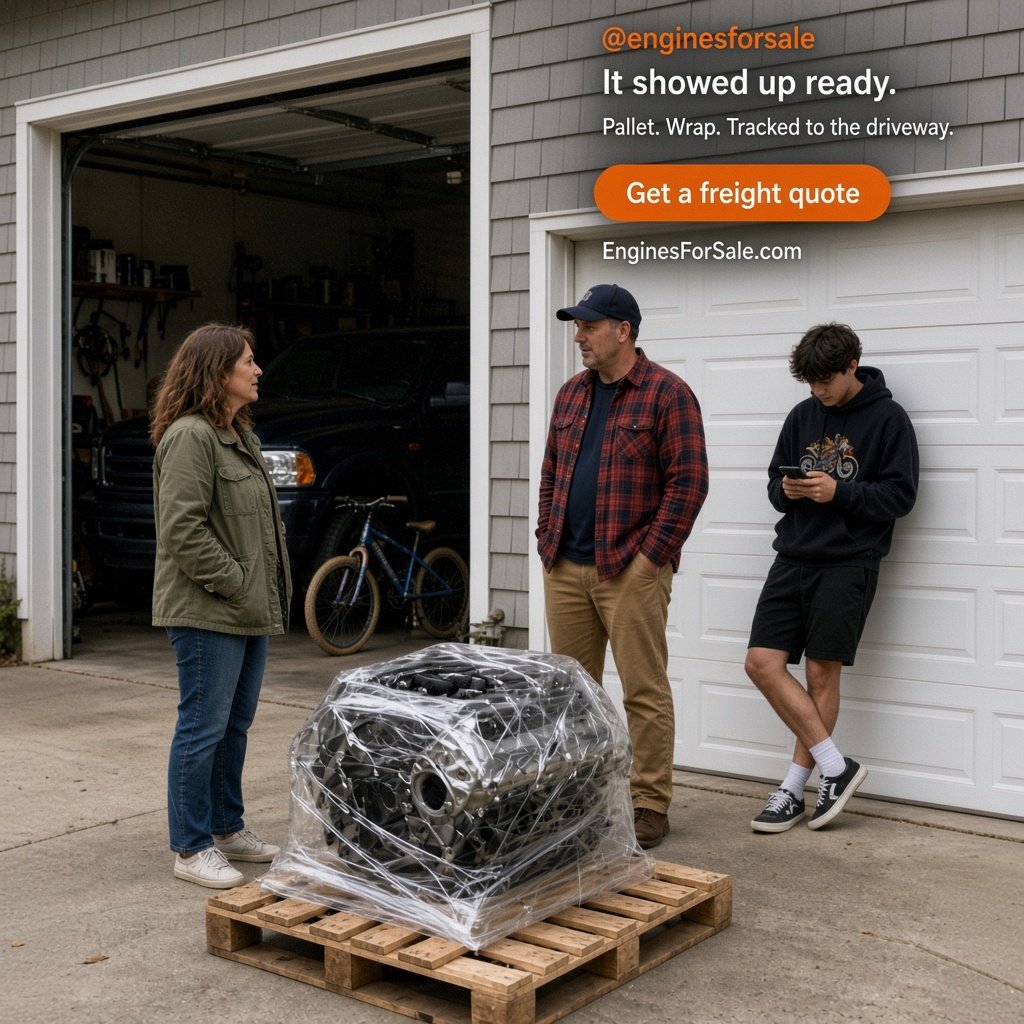
If this arrival is obvious, every later page in this journal gets easier.
Today we pin the month together. Since 28 August we have been writing the same product from six photographs: a mill that shows up, opens, drops in, bolts on, has already run, and can live in a family garage. This hub is the information architecture for that story — a table of contents that behaves like a solution, not like a blog maze. If you only read one page, read this, then jump to the chapter that matches the mess in front of you.
One path, six rooms
Buyers do not experience “content.” They experience a driveway, a crate, a hoist, a wrench, a first sound, a kitchen after. Each room has a failure mode. Freight fails as mystery. Uncrate fails as missing photos. Mount fails as force. Assembly fails as dusk. Testing fails as a first-time gamble. Family fails as a uniform that says “you don’t belong.” The journal’s job is to put a designed action in each room. That is user experience in the literal sense: the experience of using a reman mill until the truck is a truck again.
What we published from the last days of August through today
We started in late August so September would not feel like it appeared from nowhere. 28 Aug is receiving. 31 Aug is the lid. 2 Sep is gravity. 4 Sep is fasteners. 6 Sep is the stand. 8 Sep is the household. 10 Sep — today — is the map. Use it as a calendar if you are literally waiting on a truck, or as a checklist if the mill is already on your concrete.
Five machines of a calm install (plus the people)
Machine one: the pallet
Covered in how engine freight shipping works. A pallet, shrink wrap, straps, tracking. If this machine is wrong, do not pretend the hoist will forgive it.
Machine two: the crate as evidence
Covered in how to uncrate a shipped engine. Three photos before chains. Kraft and wood as a packing standard, not a vibe. Inspect first is the household’s quality control moment.
Machines three and four: hoist and wrench
Covered in drop-in mounting and the weekend assembly checklist. Two roles. Hand-start fasteners. Stop at dark. These are the hours people think of as “the job.” They only work if machines one and two already told the truth.
Machine five is the run stand — in the past tense — then people in ordinary clothes get Saturday night back.
That fifth machine is why run-tested engines matter. The people are real families, real drop-in mills. A remanufactured engine that has already spoken is the only mill we want in a garage with a backpack on the chair.
The solution table (print this)
| If you are here | Do this | Read | CTA type |
|---|---|---|---|
| Choosing a mill | Filter for reman + test + freight | Testing | Commercial: shop stock |
| Waiting on a truck | Clear a pallet rectangle, save tracking | Shipping | Transactional: freight quote |
| Lid in your hands | Photo before you dig | Unpack | Informational: inspect steps |
| Chains out | Mounts watcher + hoist watcher | Mount | Transactional: order the right config |
| Sockets everywhere | Reader + wrench, listed accessories | Assembly | Informational: sequence table |
| About to key on | Treat it as confirmation | Testing | Commercial + transactional |
| Explaining it to family | Share roles, not heroics | Families | Informational: social proof |
Three CTA types live on every chapter because people arrive in three moods. Informational: they need the next honest step. Commercial: they need to see stock. Transactional: they need a quote, an email, a phone number that answers. Mixing those without labeling them is how websites feel grabby. Labeling them is how a journal stays useful. For the marketing definition of a prompt to act, see call to action — then ignore the gimmicks and keep the phone number: 1-800-ENG-SHIP.
If you already know you need the mill
Do the transactional thing. Quote freight. Email the truck. Stop collecting tabs.
If you are still comparing
Shop what is in stock with a path to your driveway. Then read the chapter that matches your week.
How to use this journal without drowning in it
Do not read seven thousand words the night before a hoist. Read the hub, then one chapter. Send the uncrate page to whoever will hold the phone. Send the mount page to whoever is nervous about gravity. Send the family page to whoever thinks they are “not a car person.” Internal links are there so those forwards stay inside one story. That is good for SEO in the dull, true way — related pages pointing at related pages — and it is better for a person standing on cold concrete.
External links in these pieces go to Wikipedia on purpose: pallet, shrink wrap, remanufacturing, engines, torque, quality control, user experience. They are definitions, not competitors. When you need a part, you still come back to a listing. When you need a word, you should not have to trust a random forum.
If you take nothing else from 10 September 2026: a reman mill is a solution when the path is designed. Pallet. Photos. Hoist roles. Checklist. A fire that already happened once. Clothes that look like a weekend. That is the product. The photos were the brief. The journal is the interface.
All seven dated entries
FAQ
Do I have to read in date order?
No. Dates are publishing order. Your garage order might start at uncrate. Use the master table.
Why Wikipedia instead of more shop links?
Because definitions should be stable and non-salesy. Shop links are already on every page for when you are ready to buy.
Is this only DIY?
No. Hand the same path to a shop. You still want a tested, packed mill and photos on arrival.
What is the one number?
1-800-ENG-SHIP. Email Hello@enginesfosale.com. Site EnginesForSale.com. Three doors, one mill.
The truck is the test. Everything in this journal exists to make that test boring. When you want boring, shop the stock and keep this map open on the toolbox.