6 September 2026 · Testing
Why run-tested engines matter — hear it fire before it hits the truck
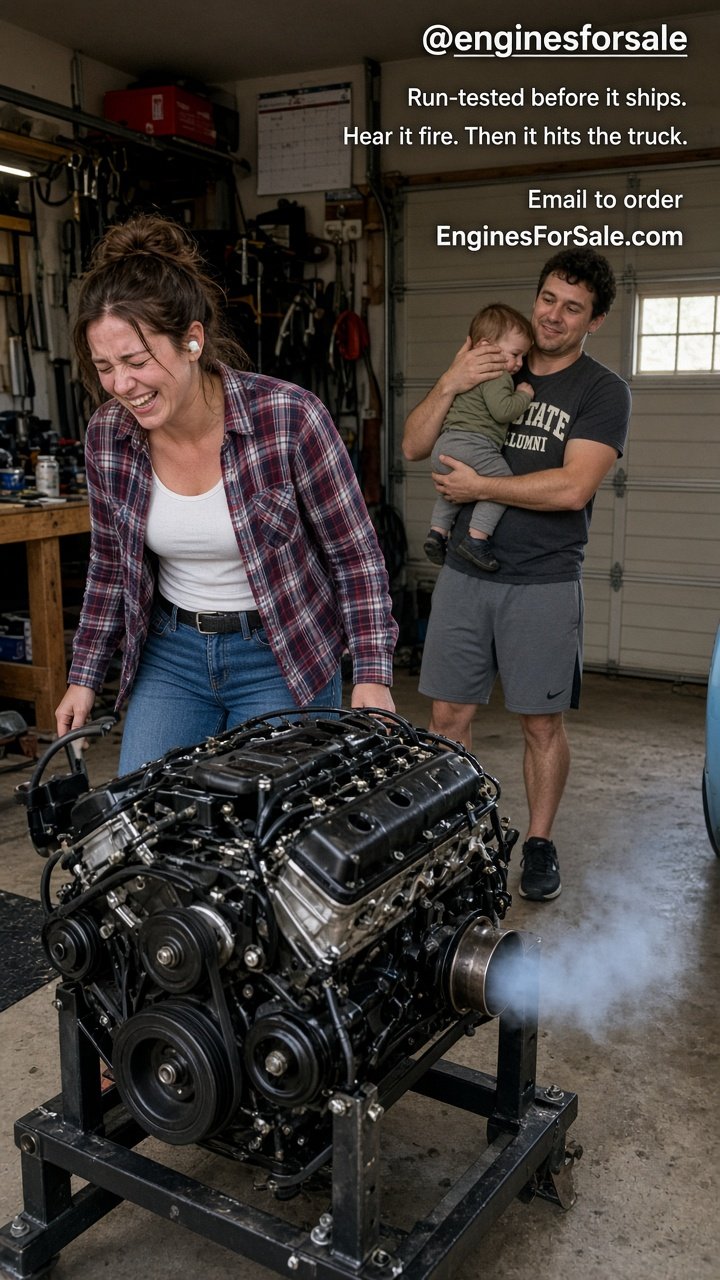
A first fire can be a family moment. It should not be the first time the mill has ever run.
A mill that has already run is a different product from a mill that “should run.” That difference is the whole commercial argument, but it is also user experience: you are buying fewer unknown sounds on a Sunday. This piece sits after assembly in the journal, and it explains why freight is the last mile of a test, not a replacement for one.
Testing is how a reman mill keeps a straight face
Remanufacturing is supposed to be a process with checkpoints. A run stand is the checkpoint customers can imagine without a tour. Oil pressure, idle, the absence of a knock that makes everyone in the room go quiet — those are not vibes. They are why families in the clients piece can say bolted in, ran like it should, without crossing their fingers so hard it hurts.
What a run stand is for (and what it is not)
A stand with a pan underneath is not a chassis dyno and not a 100,000-mile proof. It is a controlled first life: lubrication, sealing, the basic honesty of combustion. Think of it as quality control you can hear. A dynamometer is a different, heavier instrument; most driveway buyers need the simpler promise first: it fired, it did not throw a rod across the cell, someone listened on purpose.
Sound, smoke, and the paper that should follow
Sound is a dashboard
People who work on engines listen the way designers look at spacing. A clean idle has a rhythm. A problem has a story it wants to tell immediately. If nobody listened before the pallet was wrapped, you inherited that story in your garage, next to a toddler with hands on their ears. That is a cruel product.
Smoke is a sentence, not a vibe
A little haze on a first run can be assembly oil. A plume with a color and a smell is a message. The point of a factory or reman run is that the message happened in a room with a plan, not over your lawn. If you see something ugly at home after a documented test, you have a path. If you see it as the mill’s first words, you have a weekend hostage situation.
Paper is how the test travels
A test that cannot be pointed at is a rumor. Compression notes, a run sheet, even a simple “fired on stand, date, initials” is more UX than a paragraph of adjectives. Keep it with the crate photos from uncrate day. Together they are the mill’s boarding pass.
Takeaway: shipping should move a tested mill, not a hopeful one.
Email to order a mill that has already spoken
If you are done reading and you need the engine, ask for run-tested reman with freight — not a maybe with a blanket.
Your first fire should feel like confirmation
At home, follow a boring start: oil, filter, no dry crank plan, a fire extinguisher that is not theoretical, ears protected because a garage reflects sound. The woman in the flannel grinning at the stand is the correct energy — delight at a known good — not relief that a gamble paid. A partner holding a child back is also correct energy. Daily life can watch. Daily life should not be in the belt path.
If the mill does not fire after a documented reman run, you have a process: fluids, spark, fuel, then a call. You do not have a personality test. That is the solution stance of this whole September set, summarized in doorstep to first fire. Keep a paper pad on the toolbox and write what you changed. A later phone call to 1-800-ENG-SHIP goes better when you can say “oil full, new filter, no start, cranking sounds even” instead of “it just doesn’t.” Testing, at home, is still a designed conversation.
A tested reman vs. a hopeful pull
| Question | Hope | Solution |
|---|---|---|
| Has it run recently? | “It ran when I pulled it” | Fired on a stand, dated |
| Who listened? | A memory | A person with a job to listen |
| What travels with it? | A Facebook caption | Notes + protective freight |
| What is home for? | Discovery | Confirmation after mount and assembly |
| What does the kid hear? | A scare | A story they can retell |
Compression numbers and a run are related but not identical. Numbers without a fire can still hide a cam that will not live. A fire without notes can hide a one-time miracle. You want both when you can get them. You at least want the fire.
Shop reman that is honest about the test
Commercial path: pick stock where “run-tested” is a fact on the way to checkout, not poetry in a description.
Keep the chain intact
FAQ
Does a run-test mean it will last forever?
No. It means it was willing to be an engine in a controlled room. Longevity still depends on install, oil, cooling, and how the truck is used.
Should we run it on a stand at home too?
Only if you have a safe stand, fluids, and a reason. Most families first-fire in the vehicle after a careful assembly. Do not improvise a stand out of hope.
Why is a toddler in the photo?
Because that is daily life. The lesson is distance and ear protection, not “bring kids to spinning parts.”
What do we ask before we pay?
Ask whether it was run, what was recorded, and how it will be palletized. Those three answers are the product.
If the mill has already spoken, your job is to install it like you believe that. If it has not spoken, you are buying a different object. Call 1-800-ENG-SHIP when you want the first object.